Ben Grumbles Nov 4, 2026
★★★★★ Less than 24 hours call to service. Team was prompt and professional! I sincerely appreciate the communication after hours. Nice to know there is a great business handling this type of work when needed.
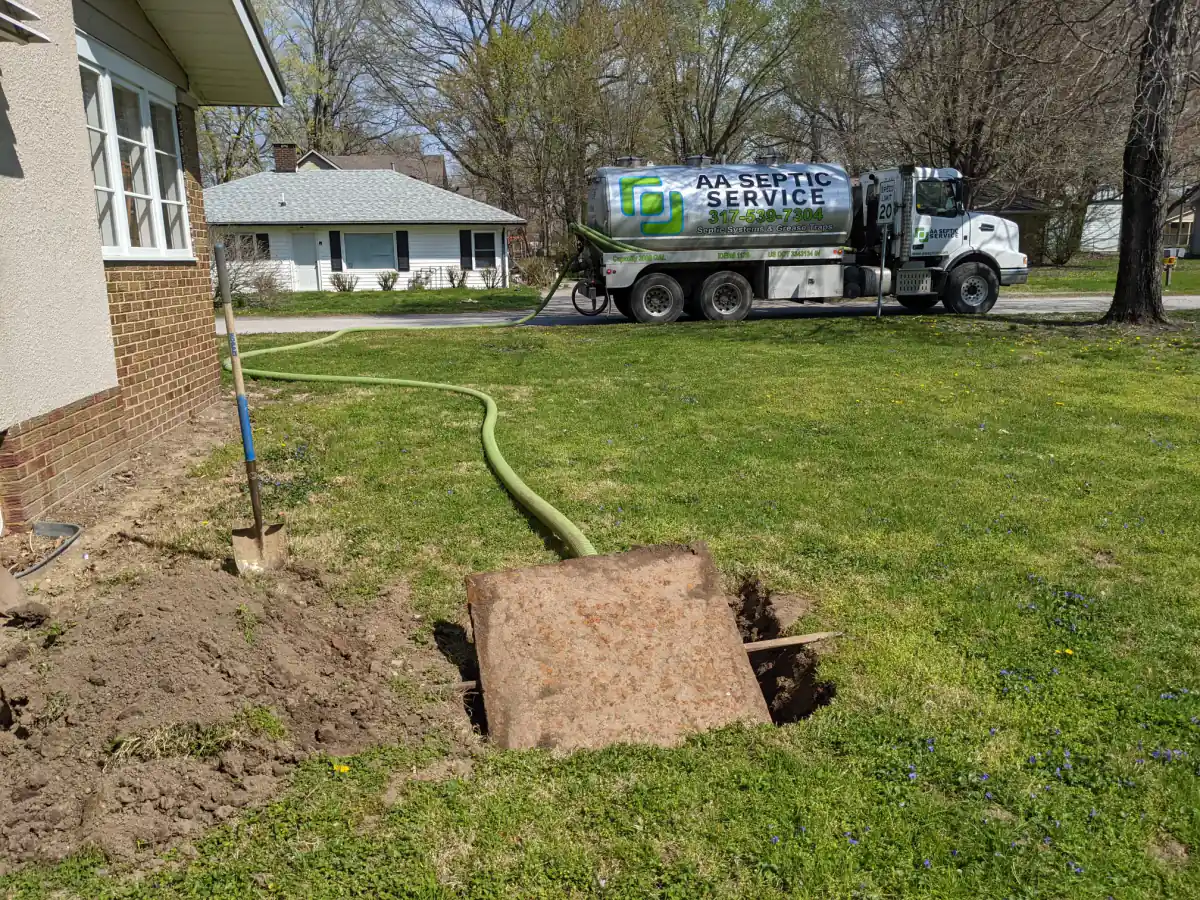
Clayton is about five miles south of Danville, one of the closest towns to our shop, and the question we get asked here more than any other is how often a tank actually needs pumping.
The short answer is every three to five years. The useful answer depends on how many people live in the house and how much water they put through it, and the difference between those two answers is what decides whether you are spending money too often or finding out the hard way that you waited too long.
Same tank, same house, very different schedules depending on:
A couple in a three bedroom house and a family of six in the same house are not on the same schedule, and treating them as if they are is how one of them wastes money and the other has a backup.
When the lid is off, the sludge and scum layers are measurable, and that measurement is the real answer for your house rather than an average of everybody's. We can do it while we are there.
Once you have one measurement and one date, the next interval stops being a guess. That is the whole value of getting on a schedule: the second appointment is informed by the first.
Most people do not need a maintenance plan. They need a date and a note of what the tank looked like last time, and then the interval takes care of itself.
We will tell you what we measured and what it implies, and we will put the next one roughly where it belongs. No contract, nothing to cancel. The value is in the measurement, not in a subscription.
Closest first:
There is more to a pump-out visit than the vacuum hose. The first job is getting the lid open. If it sits at the surface or under a riser, that takes a minute. If it is buried, we probe for it and dig down to it, which is its own line on the price sheet and starts at $75.
With the tank open, the rest of the visit follows the same order every time.
A standard pump-out is listed from $410. Whatever we noticed inside the tank, good or bad, you hear about before we pull out of the drive.
Baffles are the short walls or pipe tees at each end of a tank, and they decide what is allowed to leave it. The inlet baffle sends incoming waste downward so it does not churn up the tank. The outlet baffle draws liquid from below the floating crust and above the settled solids, so only the clearer middle reaches the pipe to the field.
When the outlet baffle cracks, rusts through or drops off, that guard is gone. Floating grease and scum slide straight into the outlet and travel out to the field, where they smear the gravel and plug the soil. Nothing changes inside the house at first, which is why a missing baffle can go unnoticed for years.
When the outlet baffle is the culprit, the tank and the pipe beyond it usually show it in one of these ways.
A new baffle is a modest repair. A field it failed to protect is a much larger one, so if we find a baffle missing while the tank is open, we will show it to you.
Jonathan Monday, our owner and president, holds an IOWPA Inspector Certificate. IOWPA is Indiana's onsite wastewater professionals' association, and the inspector certificate is a separate credential from the installer certificates he also holds. He has served the association beyond it as well, including on its Board of Directors.
What that means on your property is an inspection measured against how a sound onsite system should look and behave, rather than a quick peek under one lid. Each part is judged by what it ought to be doing: whether the tank holds a normal level, whether liquid passes through it the way the design intends, and whether the field is accepting what it is sent.
It also means the findings come in plain words. If something needs work, you hear what it is, why it matters, and how soon it needs doing. If nothing does, you hear that as well, and the inspection has done its job by telling you so.
Lift pumps and dose pumps get confused because they look alike on paper. Each sits in a basin, each is switched by floats, and each trips an alarm when it falls behind. They do different jobs at different points in the system.
The difference shows up when one fails. A lift pump handles raw waste, so trouble often starts with debris around the pump or the floats. A dose pump handles clarified liquid, so the cause is more often a float, a timer or the pump wearing out. Dose pump replacement starts at $1,475 on our published prices.
A pump truck in the parking lot at the lunch rush helps nobody. For a restaurant, a shop or an office on a grease trap or septic tank, the right time for service is whenever the building is quietest, and that is different for every business.
On the phone, let us know when you open, when you are busiest, and whether the trap sits indoors or out. An outdoor interceptor can sometimes be pumped while customers are inside without anyone noticing. A trap under the kitchen floor has to fit around prep and cleanup.
Most commercial pump-outs are planned during our scheduled hours. Emergency after-hours service is available. Call for details. If your only quiet window falls outside the schedule, ask about it when you book rather than assuming the answer is no.
Ask three companies about the same wet spot over a field and you can hear three different answers: a new field, a new pump, a cleaning. Some of that gap is honest judgment. Some of it is how the person standing in your yard gets paid.
Our technicians earn an hourly wage and take no commission on what they recommend. That changes what a recommendation is allowed to be. It can be to wait and watch. It can be the small fix that solves the problem this year. When the answer really is a bigger job, it comes with the reason attached, and you can weigh it without anyone counting on the sale.
AA Septic Service is family owned, and every starting price we charge sits on the pricing page, where you can compare it before anyone sets foot on the property.
Every three to five years for most households, but the real interval depends on how many people are in the house and how much water goes through it. We can measure the sludge and scum layers while we are on site and give you a number for your system rather than an average.
Clayton is about five miles south of our shop in Danville, which is inside the 30 mile range we state. It is an ordinary run for us.
The nearest towns we have a page for are Danville, 5 miles north; Stilesville, 7 miles southwest; Monrovia, 8 miles south. The rest of Hendricks County is in range too.
This is a good question that we are often asked. Generally speaking it's good practice to have your tank pumped out every 3-5 years. If you have a larger home, with a large family and multiple bathrooms then your septic tank might need to be pumped every 3 years. For commercial properties we usually recommend pumping annually or at least an annual septic system inspection.
It's a good idea to pump any septic tank on a property that is involved in a real estate transaction. If you are buying a new home or property that utilizes a septic system then get it pumped and inspected before you take posession.
Where we work
Clayton is about five miles south of our shop in Danville, inside the 30 mile circle below. Every town marked on it has a page of its own.
Not sure whether you are in range? Call and ask. If we cannot get to you, we will point you to someone who can.

From people down the road
About half the people who call us found us through Google reviews left by their neighbors. Read a few for yourself before you call.
Less than 24 hours call to service. Team was prompt and professional! I sincerely appreciate the communication after hours. Nice to know there is a great business handling this type of work when needed.
I never have a never will use a different company. AA Septic is the best.! I walked up to them as they were preparing to serve a homeowner near me, asked if they could work me in when they were finished and they did perfect. I did not have to spend another day at home waiting still only $410 and a free fly water.lol
Great guys to deal with very happy with there service
Very professional men. Felt they did a good job.
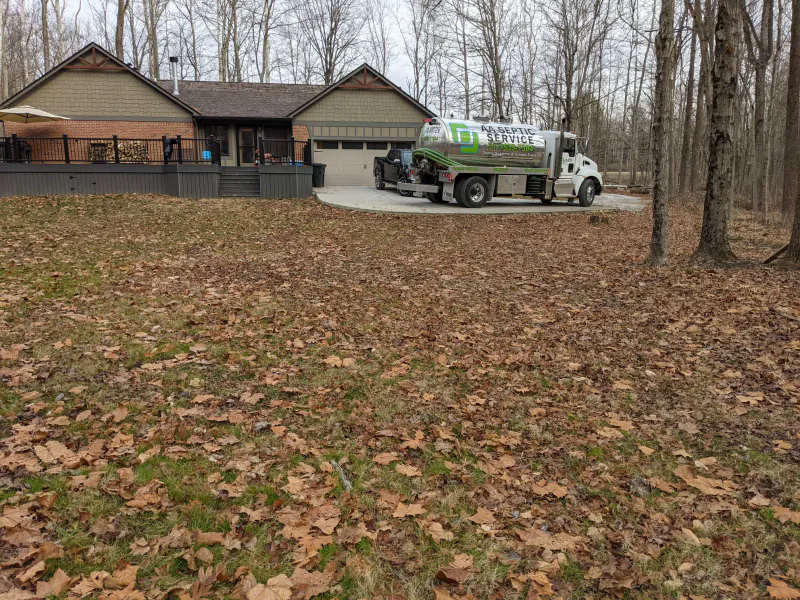
If it cannot wait, call and you will reach someone. If you would rather write it down, send us the details and we will get back to you.
Call us (317) 539-7304